A guide to Czech horse trails: planning a weekend in the saddle
A successful riding weekend starts with confirmed overnight stabling, not an ambitious mileage target. Plan access, horse care, trail manners and essential equipment before setting off.
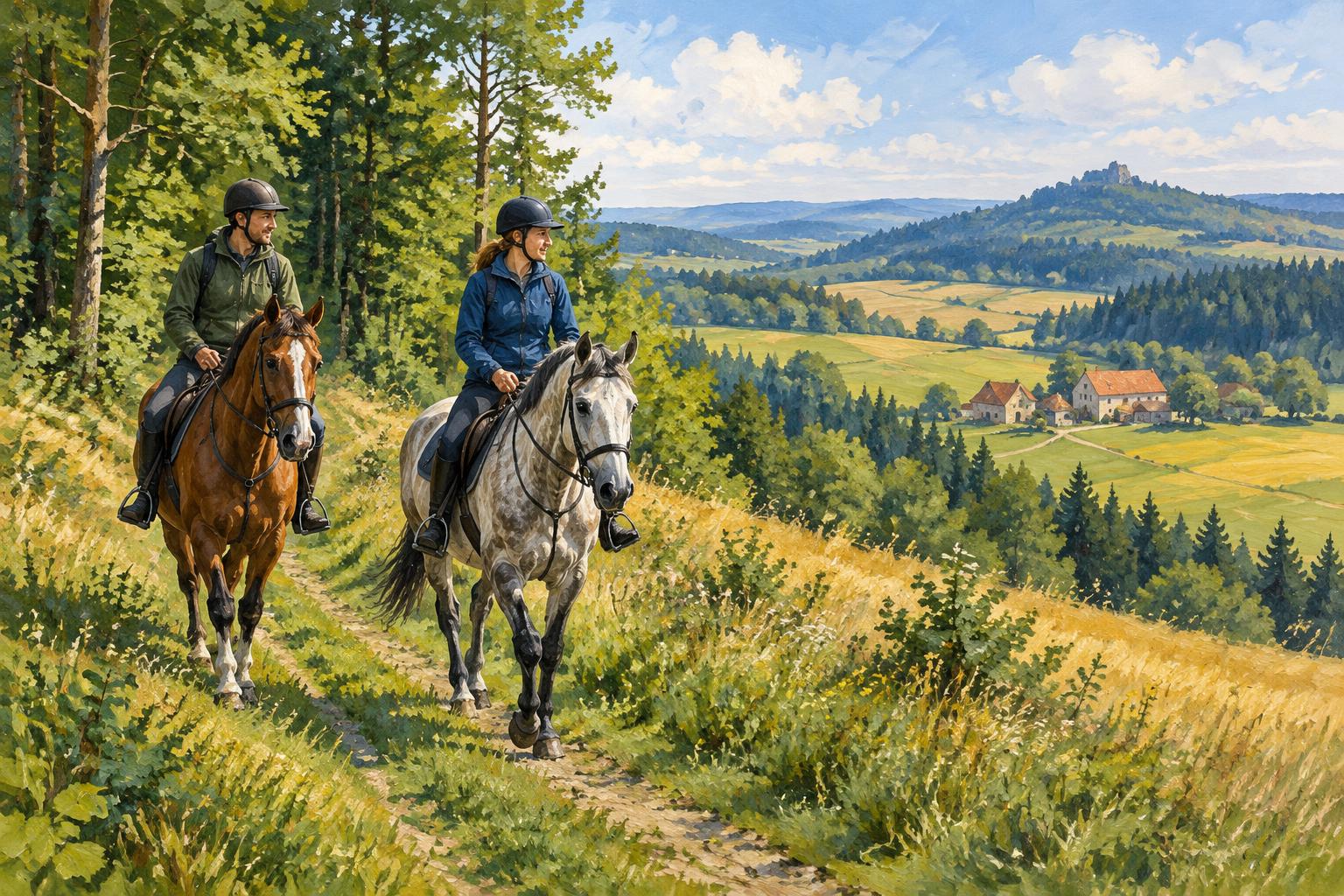
A weekend with your horse offers something an hour-long hack cannot: mist over a meadow, time to explore and an evening at an unfamiliar yard. Success is not measured in kilometres. A suitable route, the ability of the least experienced partnership and confirmed overnight arrangements matter far more.
Book the horse before drawing the route
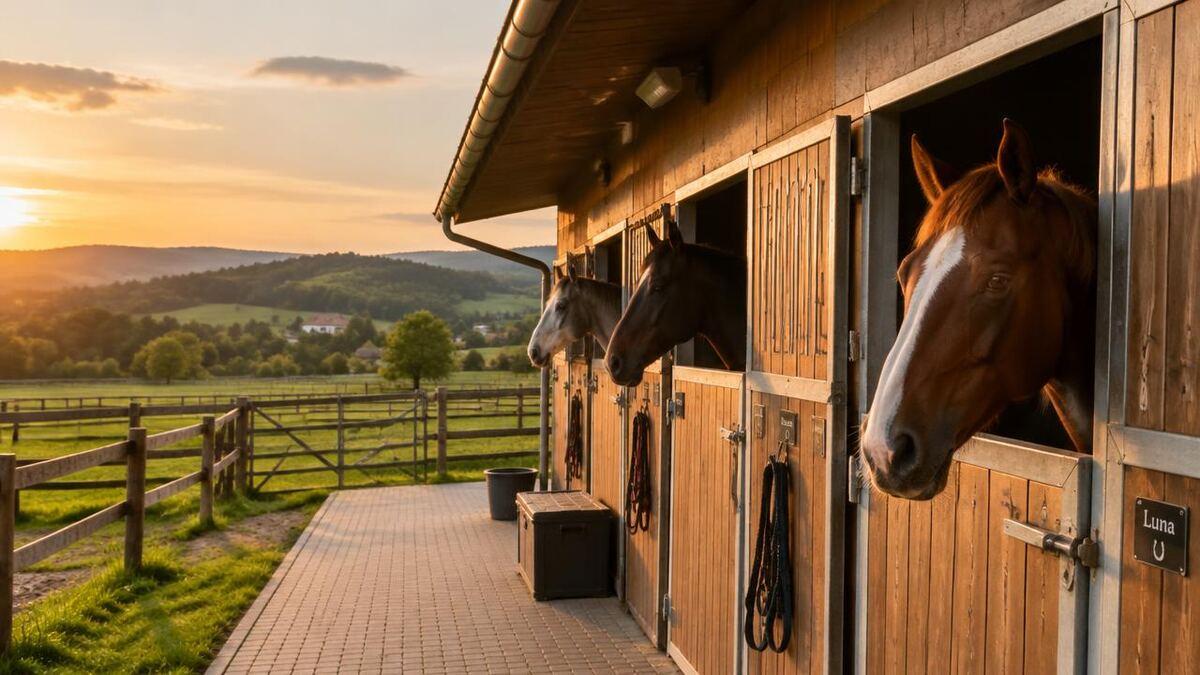
Contact horse hotels and stopover yards before joining two points on a map. Confirm dates, horse numbers, a stable box or secure paddock, drinking water, hay and separation from unfamiliar horses. Ask about trailer parking and any health-document requirements. A bed for the rider does not automatically include accommodation for the horse: confirm both separately.
A marked trail is not a guarantee of access
Czech horse trails may use a white square with a coloured circle. Marking and conditions nevertheless vary locally. Check maps, local advice, permitted access and closures. Neither a walking path nor a cycle route automatically makes a suitable bridleway. Respect protected-area rules and ask the landowner or managing authority when access is unclear. Local equestrian tourism providers can help with orientation, but their advice does not replace access checks.
Match each stage to the horse
Make day one shorter and include ways to shorten either day. Gradients, stony ground, heat and luggage can affect difficulty more than distance alone. Plan rest and watering stops in advance: water on a map may be inaccessible or unsuitable. Never enter an unfamiliar ford without checking it. Start exploring South Bohemian stables for inspiration, while checking each proposed route separately.
Courtesy keeps trails open
Walk past pedestrians and cyclists, greet them early and agree how to pass with ample space. Do not canter past other horses. Stay out of crops, avoid shortcuts and leave gates as you found them. Clear up where practical in villages and shared rest areas. Deep mud or thunderstorms are reasons to change the itinerary, not relax safety standards.
What belongs in the saddlebags?
- A properly fitted helmet, sturdy footwear and waterproof clothing.
- A headcollar and lead rope, packed away from moving tack.
- Rider and equine first-aid kits; medicines only as agreed with your vet.
- A phone, power bank, offline map and emergency contacts.
- Water and food for the rider, with horse watering and feed arranged in advance.
The day before leaving, reconfirm accommodation, weather and the named contact at your stopover. Share the finished itinerary with someone at home. The best weekend is not the longest; it is one both horse and rider would happily repeat.
Sources and further reading
Horse-trail marking guidance and trail conduct guidance. Current local rules and conditions always take priority.
Cover: an AI-assisted thematic illustration, not a photograph of a specific trail.