Czech breeding heritage: Písek National Stud and the black Kladrubers of Slatiňany
Tudor Gothic brickwork and a remarkable living horse breed: explore two distinct chapters of Czech equestrian heritage and plan respectful visits to Písek and Slatiňany.
Czech equestrian history is not confined to museums. It lives in daily horse care, the work of stable staff and buildings designed around breeding. Písek and Slatiňany offer two different perspectives: one illustrates the organisation of regional stallion breeding and striking architecture; the other preserves the distinctive black Old Kladruber. They are not two branches of the same institution.
Písek: red brick and Tudor Gothic character
The Písek complex opened in 1902. Exposed red brick, articulated gables and Gothic Revival details inspired by Tudor architecture give it a distinctive identity. Look beyond the photographic backdrop: the arrangement of courtyards and stables reflects a place built for practical work and the care of breeding stallions.
The Czech terms hřebčinec and hřebčín describe different traditional roles. A hřebčinec is principally associated with maintaining and using breeding stallions, while a hřebčín keeps its own breeding herd. That distinction helps explain why these destinations tell different stories. Extend your visit by exploring South Bohemian stables or breeders and studs in South Bohemia.
Slatiňany: home of the black Old Kladruber
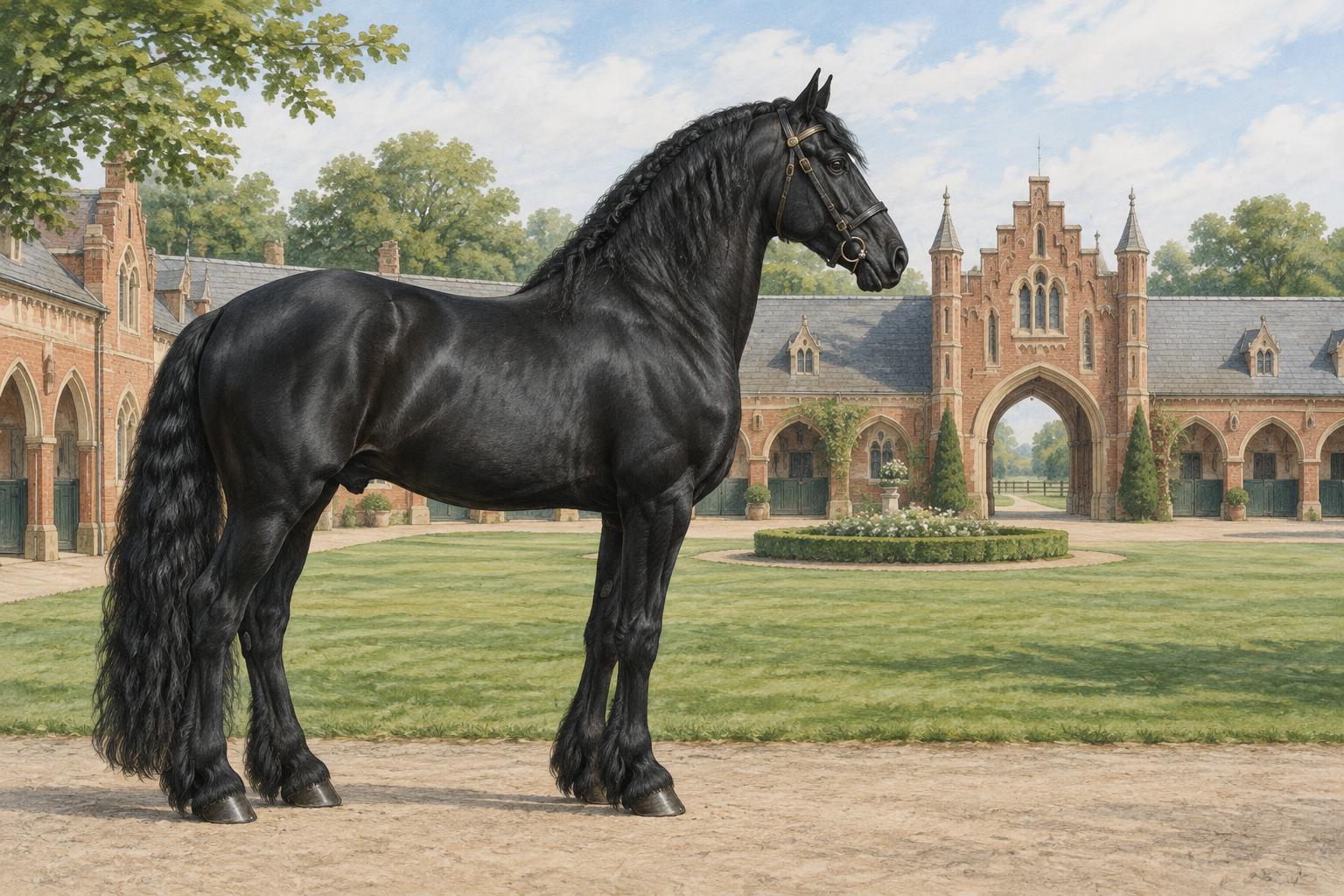
Slatiňany is part of the National Stud Kladruby nad Labem and specialises in the black variety of the Old Kladruber horse. Its regeneration is associated with Professor František Bílek; moving the regeneration herd to Slatiňany in 1945 was an important milestone.
There is more to these horses than their colour. Their pronounced convex profile, substantial frame and carriage-driving tradition reflect a sustained breeding purpose. Do not confuse Slatiňany with the main Kladruby site: their histories are connected, but their locations and visitor programmes differ. Continue exploring through breeders in the Pardubice Region or regional stables.
Respect a working equestrian site
- Check the current tour, booking requirements, language and visiting hours before travelling.
- Do not enter working areas without permission or feed the horses.
- Take photographs without disturbing animals and follow staff guidance.
- If travelling with your own horse, book overnight stabling explicitly elsewhere; a visitor tour does not imply boarding is available.
Two relaxed trips beat a rushed checklist
Písek and Slatiňany are in different regions. Allow each destination time for its tour and surroundings rather than squeezing both into a short afternoon. For children, turn the visit into a small observation challenge: find three architectural details and discuss how a breeding stallion differs from a riding-school horse. Prices and opening times are deliberately omitted because they can change.
Planning sources
Písek — visitor information, National Stud — breed regeneration and Old Kladruber history.
Cover: an AI-generated illustration inspired by breeding heritage, not a photograph or an exact depiction of either Písek or Slatiňany.